Two plates can carry exactly 600 calories and have almost nothing else in common. One is grilled salmon, spinach, and a baked potato. The other is a fistful of gummy bears and a soda. Same number on a calorie tracker. Not even close in what your body actually gets from them.
That's the problem with counting calories and calling it a day. The number is real and worth knowing, but on its own it only answers a small part of the question. It tells you how much energy you took in. It says nothing about whether that energy came with fiber, iron, calcium, or any of the other things your body is quietly waiting on.
Grilled salmon, spinach & baked potato
600 kcal
- Protein40 g
- Fiber6 g
- Iron3 mg
- Vitamin C35 mg
- Sugar3 g
Gummy bears & soda
600 kcal
- Protein2 g
- Fiber0 g
- Iron0 mg
- Vitamin C0 mg
- Sugar140 g
Illustrative example based on typical values for these foods, not a lab measurement.
Fobalanz tracks calories too, but it doesn't stop there. It tracks 14 nutrients in total: calories, the three core macros, fiber, sugar, and eight more vitamins and minerals, everything from protein and fiber down to iron, calcium, and vitamin D. Below is what each one actually does, why watching calories alone can't catch any of it, and why "how much you need" isn't really a fixed number at all.
Calories are a starting point, not the finish line
The calorie itself comes from 19th-century chemistry, a unit for how much heat is released when you burn something. That's it. Somewhere between then and now, "watch your calories" became synonymous with "eat healthy," and a whole industry of tracking apps grew up around a number that was only ever meant to describe energy.
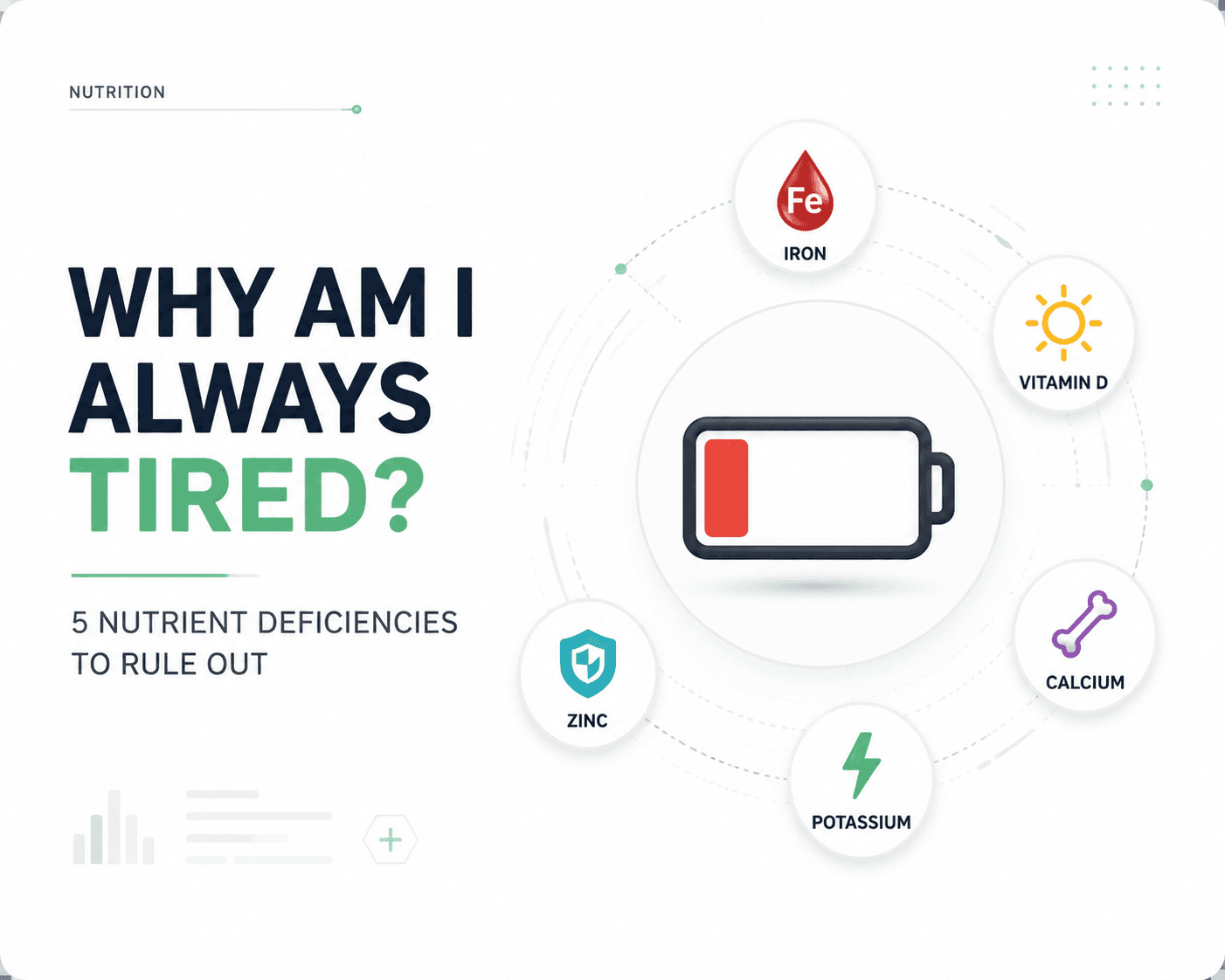
Your body doesn't run on energy alone. It needs iron to move oxygen through your blood. It needs calcium and vitamin D to keep bone density from quietly eroding. It needs fiber to keep digestion and blood sugar steady, and it needs you to watch sugar and sodium before they quietly pile up. None of that shows up if you're only looking at one number. You could hit your exact calorie target every day for a year and still end up with iron-deficiency anemia, or spend an entire winter dragging through a vitamin D shortfall you had no way of seeing coming, because nothing in "you ate 2,100 calories today" would have warned you.
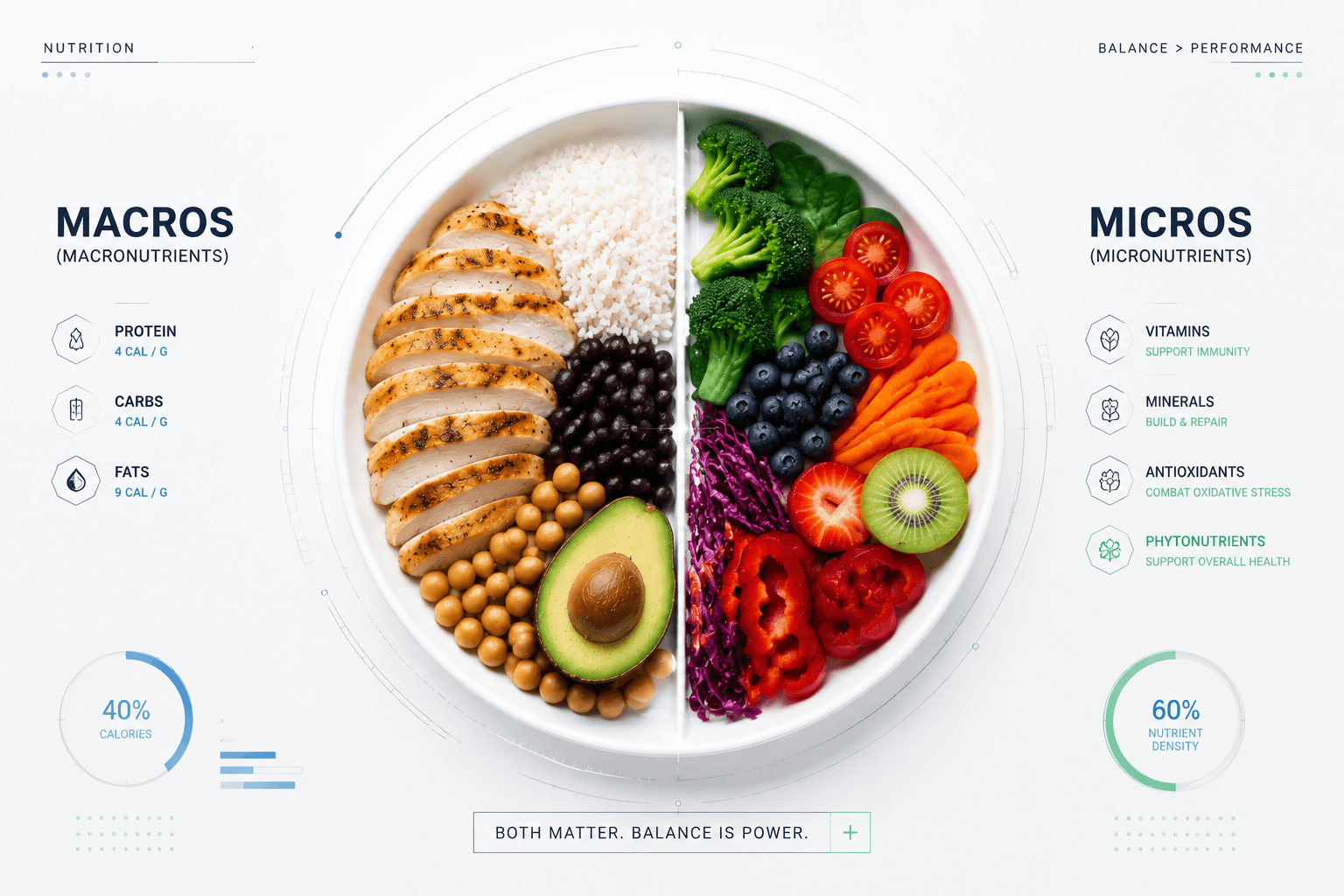
Nutrition researchers have a term for this: nutrient density, how much actual nutritional value you're getting per calorie, not just the calorie count itself. A tracker built around calories, or even calories plus the "big three" macros, is still only seeing part of the picture. Fobalanz tracks calories alongside 13 other nutrients on purpose, because the ones people skip are usually the ones that matter most.
The 4 core numbers: calories, protein, carbs, and fat
These four are the foundation everyone's already somewhat familiar with, but tracking the total without the breakdown hides more than it reveals.
Calories
Calories measure energy, nothing more. They're genuinely useful for anyone managing weight, but the number that's "right" for you depends on your age, sex, height, weight, and activity level, which is why a flat target rarely fits two different people well. Tracked on its own, a calorie count can look perfect on a day built almost entirely around refined carbs and sugar. Tracked alongside the other 13 nutrients, that same day looks very different.
Protein
Protein builds and repairs muscle, skin, hair, enzymes, and antibodies. Basically anything your body needs to construct, protein is involved in making it. It's also the macronutrient that keeps you full the longest, which is a big part of why high-protein meals tend to curb the 4pm snack attack better than a bowl of pasta does.
The baseline RDA sits around 0.8 grams per kilogram of body weight per day, but that's a floor, not a target. Anyone training regularly, recovering from an injury, or an older adult working to hang onto muscle mass typically needs more than that. Lean meat, fish, eggs, dairy, legumes, and tofu all cover it well.
Carbohydrates
Carbs get blamed for a lot, but they're your brain's preferred fuel, specifically glucose. The real distinction isn't "carbs good" or "carbs bad," it's what kind, and that's exactly why Fobalanz breaks carbohydrates down further into fiber and sugar instead of leaving them as one lump number. (For more on how the two categories work together, see macros vs. micros.) Vegetables, legumes, and whole grains digest slowly and keep blood sugar steady. Refined sugar and white flour spike it fast and leave you with, essentially, empty calories.
Fat
Fat isn't the enemy. It's required. Your body needs it to absorb vitamins A and D, build cell membranes, and produce hormones. What matters more than the total amount is the type: unsaturated fats from olive oil, nuts, avocado, and fatty fish support heart health, while too much saturated and trans fat pushes cardiovascular risk in the wrong direction.
Because fat carries more calories per gram than protein or carbs, it's usually the first thing people cut when they're trying to bring a number down, sometimes without realizing that also cuts how well they absorb vitamin A and D.
Fiber and sugar: the carb quality check a calorie count skips
A calorie count treats all carbohydrates the same. Fiber and sugar are why that's a problem, and they're exactly the two numbers most calorie-only apps never separate out.
Fiber
Fiber is the part of plant food your body can't fully digest, and that's precisely what makes it useful. It slows digestion, keeps blood sugar steadier after meals, feeds the bacteria in your gut, and helps lower cholesterol. Most adult women need around 25 grams a day, most adult men around 38 grams, and both numbers drop slightly with age. Most people eating a typical Western diet get closer to 15 grams, less than half the target, which is one of the more common and least talked about gaps out there. Whole grains, legumes, vegetables, fruit, and nuts are the best sources.
Sugar
Not all sugar is equal either. The natural sugar in a piece of fruit comes with fiber, water, and vitamins attached. Added sugar, the kind stirred into sauces, cereal, and soda, comes with none of that. Fobalanz caps added sugar at roughly 25 grams a day for most people (about 5% of typical daily calories), tighter still on a keto plan. It's a number that's easy to blow past without noticing, since added sugar hides in foods that don't taste particularly sweet, like bread, salad dressing, and flavored yogurt. Tracking sugar separately from total carbs is often the fastest way to spot where a diet is quietly going wrong.
The 8 vitamins and minerals Fobalanz tracks
These show up in much smaller doses, milligrams and micrograms instead of grams, but small isn't the same as unimportant. A gap of a few milligrams a day, kept up for months, is plenty to cause real symptoms: fatigue, weak bones, high blood pressure, a weaker immune system. A calorie count won't catch any of it.
Sodium
Sodium works a little differently from the rest of this list. The baseline here is around 1,500 mg a day, the amount your body actually needs for fluid balance and nerve function, and it climbs for physically demanding jobs and higher activity levels, since sweat carries sodium out of the body faster than most people replace it. That's not an invitation to add salt: most people eating a typical Western diet already get well above this number without trying. Treat it as a reference point, not a bar to fill.
Calcium
Best known for bones, calcium also handles muscle contraction, including your heartbeat, nerve signaling, and blood clotting. Most adults land around 1,000 mg a day, climbing to 1,200 mg for women over 50 and adults over 70, right when bone density starts to slip. Dairy, fortified plant milk, leafy greens, and canned fish with the bones still in, sardines mainly, all get you there.
Iron
Iron builds hemoglobin, which is what actually carries oxygen from your lungs to the rest of you. Adult men need about 8 mg a day. Adult women aged 19 to 50 need close to 18 mg, more than double, thanks to menstrual blood loss, one of the clearest examples of why a single generic number doesn't work for everyone. Run low on iron and the first signs are usually fatigue, weakness, and trouble concentrating, well before a blood test flags anemia. See our full guide on signs you might be low on iron for what to watch for. Red meat, seafood, lentils, spinach, and fortified cereal all help, and pairing plant sources with vitamin C noticeably improves how much of it you absorb.
Potassium
Potassium keeps fluid balance, muscle contractions, including your heart, and nerve signals working properly, and it works against sodium to help keep blood pressure in check. Adults need around 2,600 mg a day for women and 3,400 mg for men. Bananas get all the credit, but potatoes, beans, yogurt, and leafy greens actually deliver more per serving. Most people eating a typical Western diet run short on potassium while running high on sodium, not a great combination for blood pressure over time.
Vitamin A
Vitamin A supports night vision, immune function, and skin and organ health. Men need roughly 900 mcg RAE a day, women about 700. It comes in two forms: preformed vitamin A (retinol) from liver, eggs, and dairy, and provitamin A carotenoids from orange and dark leafy vegetables like carrots, sweet potatoes, and spinach, which your body converts as it needs it.
Vitamin C
Everyone knows vitamin C for immunity, but it's also what your body uses to build collagen, for skin, cartilage, and wound healing, and it meaningfully boosts how much iron you absorb from plant food. Men need about 90 mg a day, women about 75 mg. Citrus, strawberries, bell peppers, and broccoli are the heavy hitters. Since your body doesn't store much of it, one big glass of orange juice on Sunday doesn't cover the rest of the week.
Vitamin D
This one's genuinely odd compared to everything else on this list: your skin makes it from sunlight. That means how much you need from food depends on where you live, the season, your skin tone, and how much time you actually spend outside, not just your age and sex. We go deeper on this in why sunlight changes how much vitamin D you need. Fobalanz starts most adults around 20 mcg a day, more for people over 70, and raises that further for anyone who works indoors or gets little sun, since their skin isn't making up the difference on its own. Few foods carry it naturally (fatty fish, egg yolks, and fortified milk are the short list), which is a big reason roughly one in four people run low even in places that get plenty of sun.
Zinc
Zinc backs up immune function, wound healing, and protein and DNA synthesis. Men need about 11 mg a day, women about 8 mg. Meat, shellfish (oysters especially), legumes, seeds, and dairy are the main sources. Since zinc from plants is harder for your body to absorb than zinc from animal sources, vegetarians and vegans often need a bit more than the standard number.
Your "right amount" isn't on any chart
Every number above is a population average, built to be a reasonable starting point for a lot of people, not a personal prescription for you specifically. Real needs shift based on things a printed chart simply can't account for.
Age and sex move the needle a lot. A woman under 50 needs more than double the iron of a man her age, vitamin D needs go up after 70, and calcium requirements climb for women past 50.
Activity level matters too. Train five or six days a week and you need meaningfully more protein, iron, and total calories than someone at a desk all day, more to repair muscle, more to support the extra blood volume that comes with regular training.
Health conditions and medications quietly shift things as well. Celiac disease and Crohn's disease interfere with how well you absorb key vitamins. Some medications do the same. Proton pump inhibitors can cut down iron absorption, and certain diuretics mess with potassium and sodium levels.
Then there's the one almost nobody thinks about: sun exposure. Since your skin makes vitamin D from sunlight, someone who's outside most of the day needs a lot less from food than someone stuck indoors through a gray winter, even if everything else about the two of them is identical. Hand them both the same vitamin D target and you've gotten it wrong for at least one.
Put together, this is why a single nutrient chart, no matter how well researched, can't actually tell you what you need. It's also why Fobalanz starts with a short profile (age, sex, height, weight, activity level, lifestyle, health conditions, medications, sun exposure) instead of handing everyone the same static average.
So calories aren't ignored, they're just not the whole story
None of this is an argument against tracking calories. Energy balance is real, and for anyone managing weight, it's genuinely useful to know. The problem is treating it as the whole story when it's really one number among fourteen. You can be dead-on target for calories and still be quietly running low on fiber or iron, or well over on sodium and sugar, patterns that don't show up as weight change but as fatigue, digestive trouble, high blood pressure, or bone density you won't notice slipping until much later.
That's the gap Fobalanz closes. Take a photo of your meal, and the AI reads the ingredients and estimates all 14 nutrients at once, not just calories. Scan a barcode for packaged food. Your daily nutrition score reflects how close you landed to your personal targets across all 14, so it's entirely possible to nail your calorie goal and still see, in black and white, that you went over on sugar or came up short on iron that day. A calorie-only app was never built to tell you that. Fobalanz was.
If you're currently tracking macros by hand and it's already starting to feel like a chore, here's how to make it stick instead of giving up in a few weeks like most people do.
The bottom line
Calories answer exactly one question: how much energy did you eat. On their own, they can't tell you if that energy came with enough fiber to keep your gut happy, enough iron to get you through 3pm without crashing, or enough calcium to protect your bones twenty years out. Fourteen nutrients determine how well you're actually eating. One number never could. And what counts as enough is personal, not generic.
Try Fobalanz free and see what a full nutrient breakdown looks like for your next meal.
This article is for informational purposes only and isn't medical advice. If you're managing a health condition or thinking about changing your diet in a significant way, talk to a doctor or registered dietitian.
Nutrient values are based on NIH and USDA dietary guidelines; sodium and vitamin D targets are Fobalanz's own, personalized for activity and sun exposure.