Open any nutrition app and you'll run into these two words fast: macros and micros. They get thrown around like everyone already knows what they mean, which is a shame, because the actual idea behind them is simple, and once it clicks, it changes how you think about a plate of food.
Here's the short version. Macronutrients are what your body burns for energy: protein, carbohydrates, and fat. Micronutrients are everything else your body needs in much smaller amounts to actually function: iron, calcium, vitamin D, and a handful of others. You can hit your macro targets perfectly every single day and still be running low on several micronutrients without a single warning sign on a scale or a calorie app.
Macronutrients: the fuel
Macros are called "macro" because you need them in large amounts, grams rather than milligrams, and because they're where your calories actually come from. Every calorie you eat is one of these three.
Protein
Protein is the raw material for muscle, skin, hair, enzymes, and antibodies, and it's the macronutrient most linked to keeping you full. A baseline RDA sits around 0.8 grams per kilogram of body weight a day, though anyone training regularly or working to preserve muscle as they age typically needs more. It comes from meat, fish, eggs, dairy, legumes, and tofu.
Carbohydrates
Carbs are your body's fastest, most accessible energy source, and your brain in particular runs heavily on the glucose they provide. Not all carbs behave the same way once they're in your body, which is really the whole reason "carbs" isn't a single useful number on its own. Whole grains, legumes, and vegetables digest slowly. Refined sugar and white flour hit your bloodstream fast and add up quickly.
Fat
Fat gets a bad reputation it doesn't fully deserve. It's essential for absorbing certain vitamins, building cell membranes, and producing hormones. What matters most isn't the total amount so much as the type: unsaturated fat from olive oil, nuts, and fatty fish supports heart health, while too much saturated and trans fat works against it.
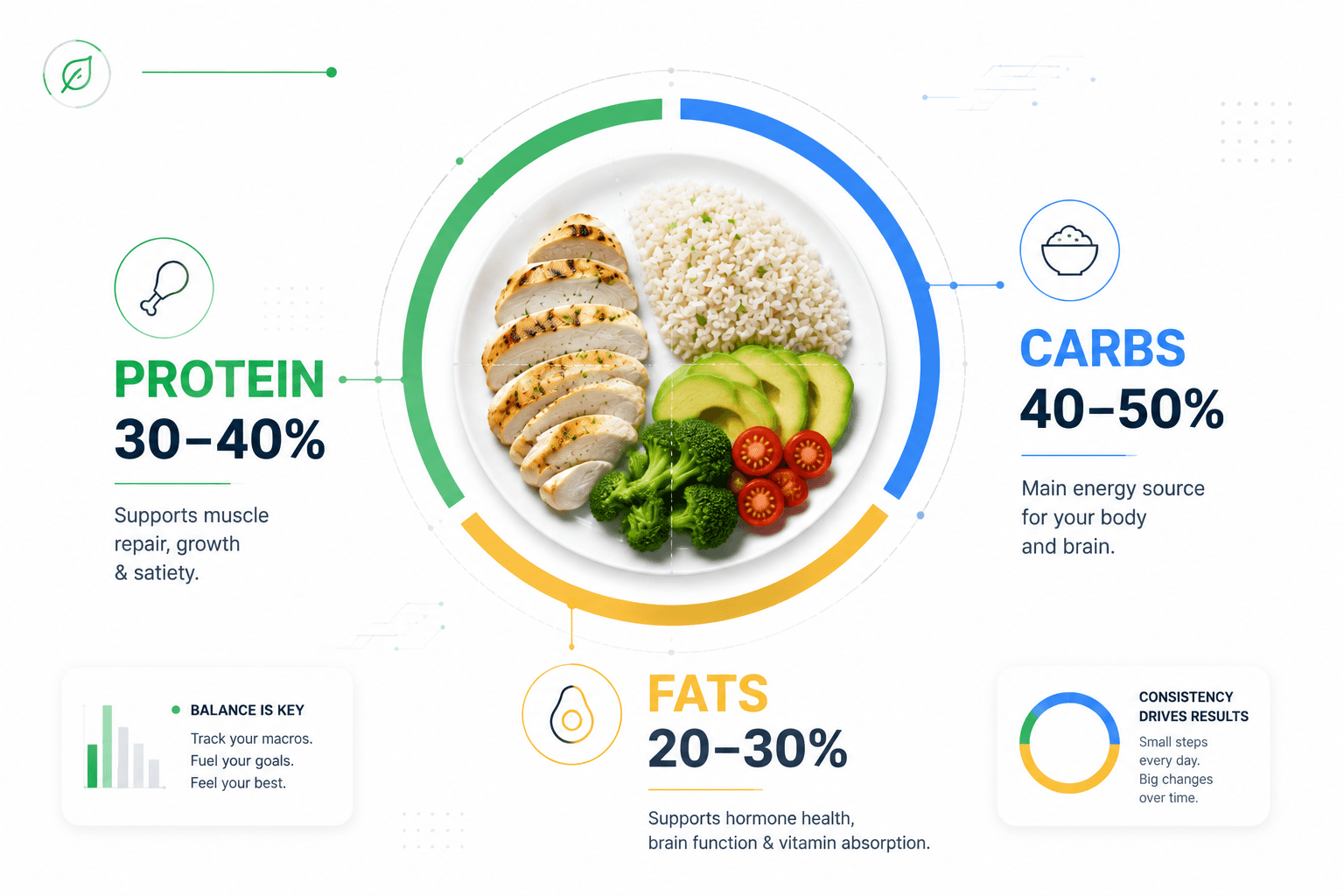
For context, most dietary guidelines put a healthy range on how your daily calories should split across the three:
Share of daily calories, per U.S. Dietary Guidelines (Acceptable Macronutrient Distribution Ranges).
Hit your calorie target with any mix inside those ranges and your macros technically check out. That's exactly where the story stops being complete.
Micronutrients: the machinery
Micronutrients are vitamins and minerals your body needs in far smaller doses, milligrams and sometimes just micrograms rather than grams. They don't supply energy the way macros do, but they run nearly everything else: moving oxygen through your blood, keeping your bones dense, supporting your immune system, regulating blood pressure, and dozens of other jobs happening in the background whether you notice them or not.
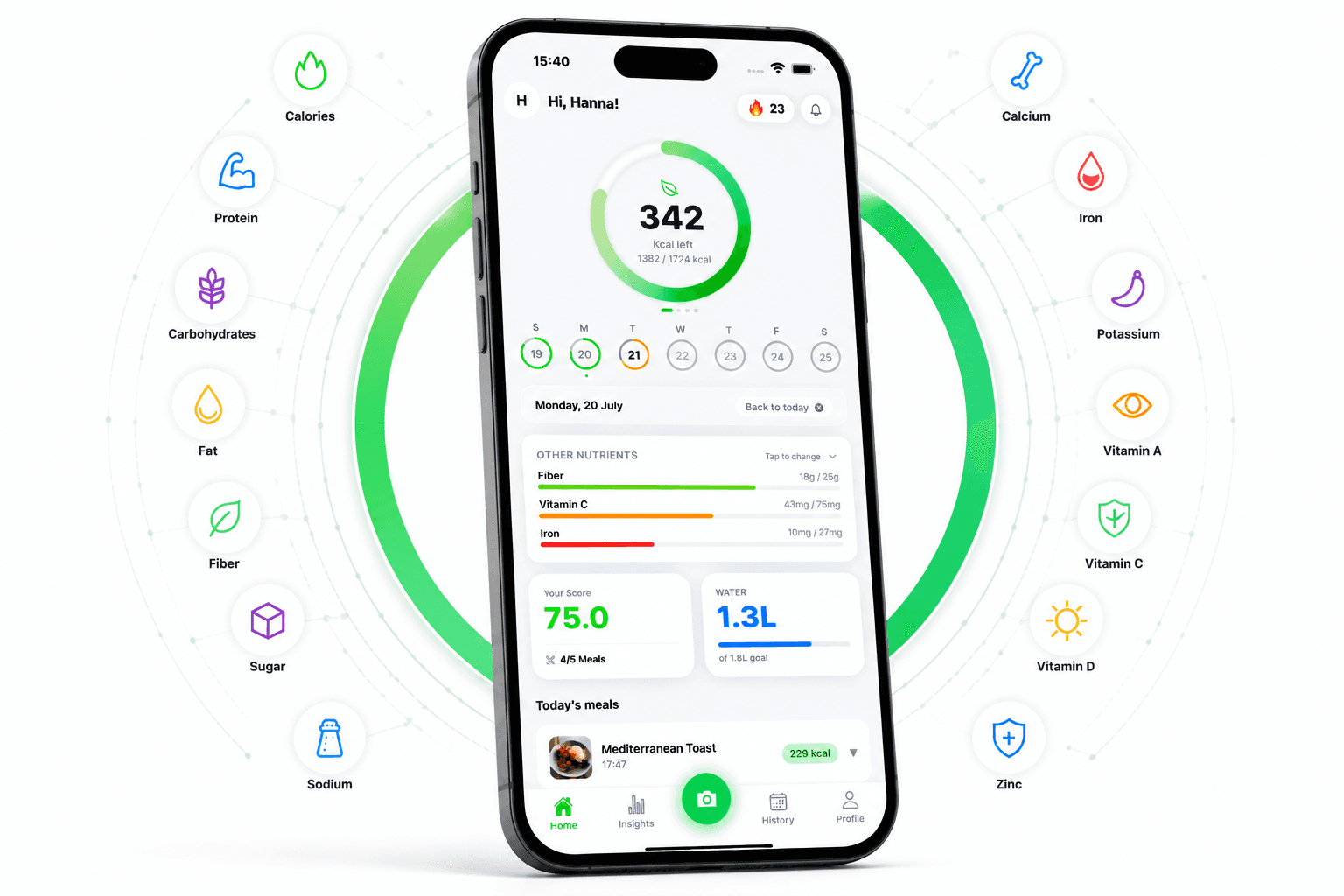
These are the 8 micronutrients Fobalanz tracks alongside the macros:
Fiber and sugar sit in a slightly different bucket. Technically they're both part of the carbohydrate macro, not micronutrients in the strict vitamin and mineral sense, but they behave enough like their own category, one you generally want more of, one you generally want less of, that separating them out matters just as much as tracking a micronutrient does.
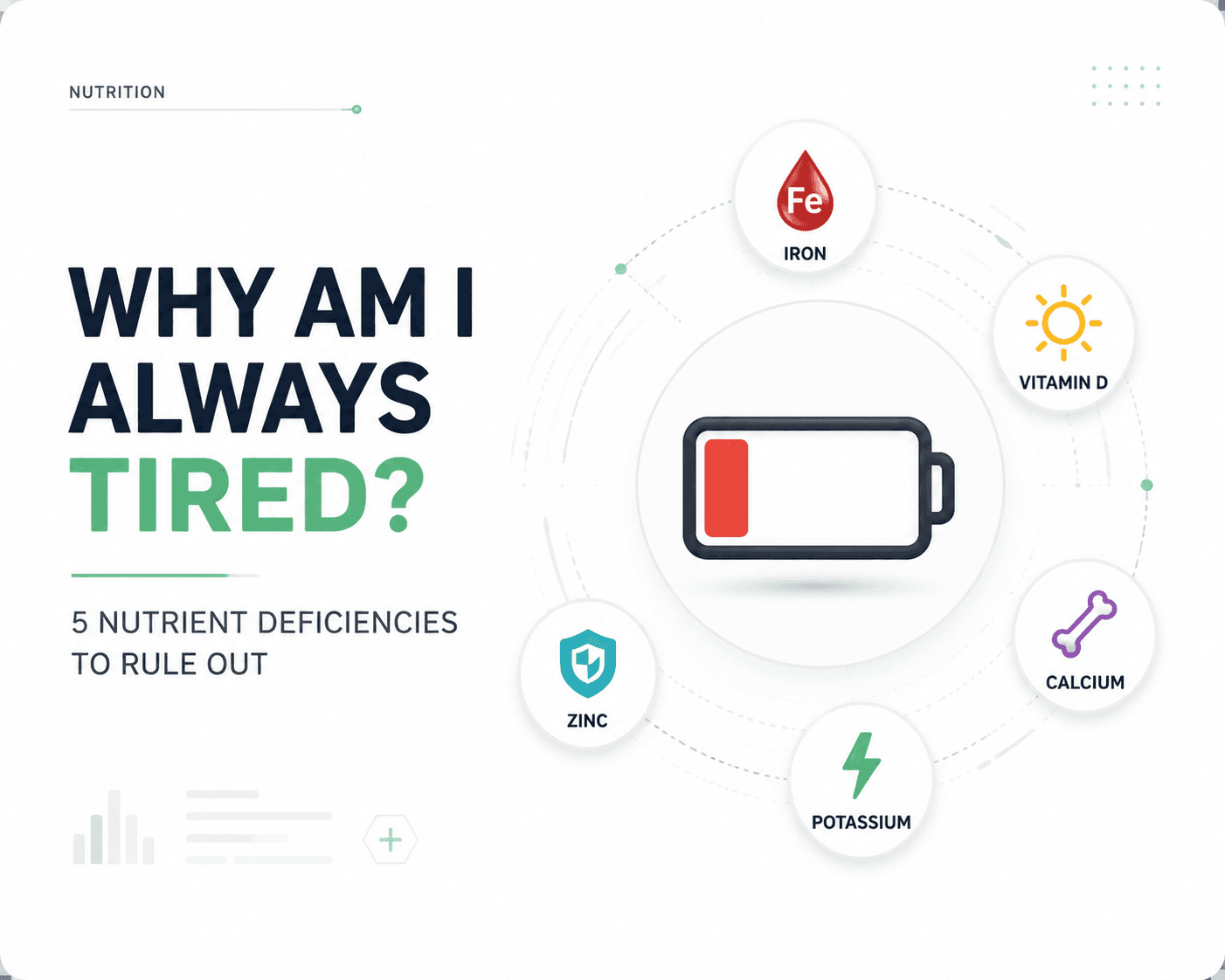
A shortfall in any of these doesn't show up on a bathroom scale. It shows up as fatigue that doesn't have an obvious cause, getting sick more often than people around you, brittle nails, or brain fog that coffee doesn't fix. By the time it's obvious enough to mention to a doctor, it's often been building for months.
Same macros, completely different nutrition
Here's where the difference stops being theoretical. Take two meals with nearly identical calories and macros.
Turkey sandwich (white bread) + fries
520 kcal
Protein 28 g · Carbs 55 g · Fat 20 g
- Fiber3 g
- Vitamin C4 mg
- Iron2 mg
- Potassium480 mg
Grilled chicken bowl (quinoa, black beans & broccoli)
520 kcal
Protein 28 g · Carbs 55 g · Fat 20 g
- Fiber14 g
- Vitamin C65 mg
- Iron6 mg
- Potassium1,050 mg
Illustrative example based on typical values for these foods, not a lab measurement.
Same calories. Same protein, carbs, and fat, down to the gram. On any app that only tracks macros, these two meals are interchangeable. In reality, one delivers more than double the potassium, triple the iron, and over 15 times the vitamin C. Eat the first version regularly and your macro app will tell you you're right on track, while your iron and vitamin C intake quietly falls apart in the background.
Why tracking only macros leaves you half-blind
Macro tracking became the default because it's simpler. Three numbers, easy to hit, easy to explain. The problem is that "easy to track" and "actually tells you how well you're eating" aren't the same thing.
You can nail your protein, carb, and fat targets every day for months and still develop signs of an iron shortfall like constant fatigue and trouble concentrating, or spend a whole winter running low on vitamin D without your macro app ever flagging it, since neither of those has anything to do with protein, carbs, or fat. Macros answer how much energy you're eating and roughly how it's split. Micros answer whether that energy is actually doing what your body needs it to do.
This is the entire reason Fobalanz tracks 14 nutrients instead of the usual three. Calories and macros are still in there, they matter, but so are fiber, sugar, sodium, calcium, iron, potassium, and vitamins A, C, and D. For the full breakdown of what each one does and how much you actually need, see the 14 nutrients that actually matter.
How much of each you actually need
There's no single answer, and that's kind of the point. Macro needs shift with activity level and goals: someone strength training needs more protein than someone who isn't, someone endurance training needs more carbs to fuel it. Micronutrient needs shift with age, sex, health conditions, medications, and factors people rarely think to track, like how much sun exposure you get, since that changes how much vitamin D your body makes on its own, or whether you're getting enough iron to begin with.
Once you know your numbers, actually logging them meal after meal is a different problem. If manual tracking has burned you out before, see how to track macros without it turning into a part-time job.
The bottom line
Macros answer how much. Micros answer how well. A tracker that only covers macros can tell you you're eating enough, while missing whether you're eating enough of what actually keeps you running. Both numbers matter, and neither one alone tells the full story of what's on your plate.
Try Fobalanz free and see your full macro and micronutrient breakdown from your next meal.
This article is for informational purposes only and isn't medical advice. If you're managing a health condition or thinking about changing your diet in a significant way, talk to a doctor or registered dietitian.
Macronutrient ranges and nutrient values are based on NIH, USDA, and Institute of Medicine dietary guidelines.