Most nutrient deficiencies don't announce themselves. There's no single moment where you suddenly feel "low on calcium." Instead, it's a slow drift: a bit more tired than usual, catching every cold that goes around the office, nails that split more than they used to. Easy to blame on a busy month. Easy to keep ignoring for the next one too.
That's exactly what makes these deficiencies dangerous in a quiet way. They're common, they build gradually, and by the time the signs are obvious enough to bring up with a doctor, they've often been building for months. Below are the five that show up most often, what they actually feel like, and why the symptoms overlap so much that it's genuinely hard to tell them apart without knowing what to look for.
Why these deficiencies stay silent for so long
Your body is good at compensating. When a nutrient runs low, it typically draws from stored reserves first, in the liver, bones, or muscle tissue, which keeps you functioning normally for a while even as those reserves quietly shrink. Symptoms tend to show up only after that buffer runs out, which is exactly why the timeline between "starting to run low" and "clearly deficient" can stretch for months.
Standard checkups don't always catch it either. A routine blood panel might check hemoglobin but not ferritin, or might not include zinc at all unless specifically requested. And because early symptoms overlap so much with normal life, tiredness, brain fog, feeling run down, it's genuinely hard to know which nutrient, if any, is behind it without testing for it directly.
The five most common silent deficiencies
Iron
Iron builds hemoglobin, the part of your blood that carries oxygen around your body. Low iron shows up as fatigue, getting out of breath easily, pale skin, and trouble concentrating, often well before a standard blood test flags anemia. Women who menstruate, pregnant people, and vegetarians are at meaningfully higher risk. For the full breakdown of signs, causes, and what to eat, see signs you might be low on iron.
Vitamin D
Vitamin D is unusual because your skin makes it from sunlight, which means your dietary need depends heavily on where you live and how much sun you actually get. Low levels are extremely common, especially in winter or for anyone who spends most of the day indoors, and show up as fatigue, bone or muscle discomfort, and getting sick more often. See why sunlight changes how much vitamin D you need for the full picture.
Calcium
Calcium is best known for bone strength, but it also handles muscle contraction (your heartbeat included), nerve signaling, and blood clotting. Because your body pulls calcium from bone reserves first when dietary intake falls short, low calcium is often the quietest deficiency on this list: it doesn't cause obvious symptoms until much later, showing up as reduced bone density that's easy to miss until a fracture or a bone scan reveals it. A sharper short-term drop can cause muscle cramps or numbness and tingling in the fingers. Most adults need around 1,000 mg a day, climbing to 1,200 mg for women over 50 and adults over 70, right when bone density starts to slip. Women, older adults, and anyone who avoids dairy without replacing it are at higher risk.
Potassium
Potassium keeps fluid balance, nerve signals, and muscle contractions, your heartbeat included, running smoothly, and it works against sodium to help manage blood pressure. Adults need around 2,600 mg a day for women and 3,400 mg for men, and most people eating a typical Western diet fall short of that while getting more sodium than they need. Mild shortfalls tend to show up as muscle weakness, cramping, or fatigue. Severe potassium loss, usually from causes like vomiting, diarrhea, or certain diuretics rather than diet alone, can affect heart rhythm, which is a more serious matter that needs medical attention rather than a dietary fix.
Zinc
Zinc supports immune function, wound healing, and your sense of taste and smell. A mild shortfall can show up as more frequent colds, slow healing cuts, or a noticeably duller sense of taste, and in more pronounced cases, hair loss. Adult men need about 11 mg a day, women about 8 mg. Vegetarians and vegans are at higher risk, partly because plant foods contain compounds that reduce how much zinc the body actually absorbs, and pregnant or breastfeeding women need more to support their baby's growth.
Why the symptoms overlap so much
This is the part that makes self-diagnosing nearly impossible without testing: several of these deficiencies share the exact same early symptoms, so "I'm always tired" or "my legs keep cramping" could point to more than one cause at once.
| Symptom | Could point to |
|---|---|
| Persistent fatigue | Iron, vitamin D, potassium |
| Muscle cramps or weakness | Calcium, potassium |
| Getting sick often | Vitamin D, zinc, iron |
| Trouble concentrating | Iron, vitamin D |
| Hair or nail changes | Iron, zinc |
| Bone or joint discomfort | Calcium, vitamin D |
| Slow wound healing | Zinc |
Fatigue alone shows up on three of the five lists. That's exactly why "I'm just tired" is such an unhelpful starting point on its own, and why knowing what you're actually eating matters more than guessing from symptoms.
Who's more likely to have more than one gap at once
A few groups face higher odds of running low on several of these at the same time, not just one.
People on restrictive diets, whether that's cutting out entire food groups, following a very low calorie plan, or eating a narrow rotation of the same meals, tend to miss more than one nutrient at once simply because variety is what covers the gaps.
Pregnant and breastfeeding people need substantially more iron and zinc, plus reliable calcium intake to support their baby's developing bones, on top of everything else pregnancy already demands from the body.
Endurance athletes lose iron and potassium through sweat and, in some cases, minor gut bleeding from repeated impact, and training heavily without enough energy or calcium intake can also affect bone density over time.
Older adults are more likely to run low on calcium and vitamin D specifically, partly due to reduced absorption efficiency and reduced skin efficiency at producing vitamin D with age.
People with GI conditions like celiac disease, Crohn's disease, or ulcerative colitis absorb several nutrients less efficiently across the board, not just one, which is why these conditions show up repeatedly across the risk lists above.
Why "eating healthy" doesn't guarantee you're covered
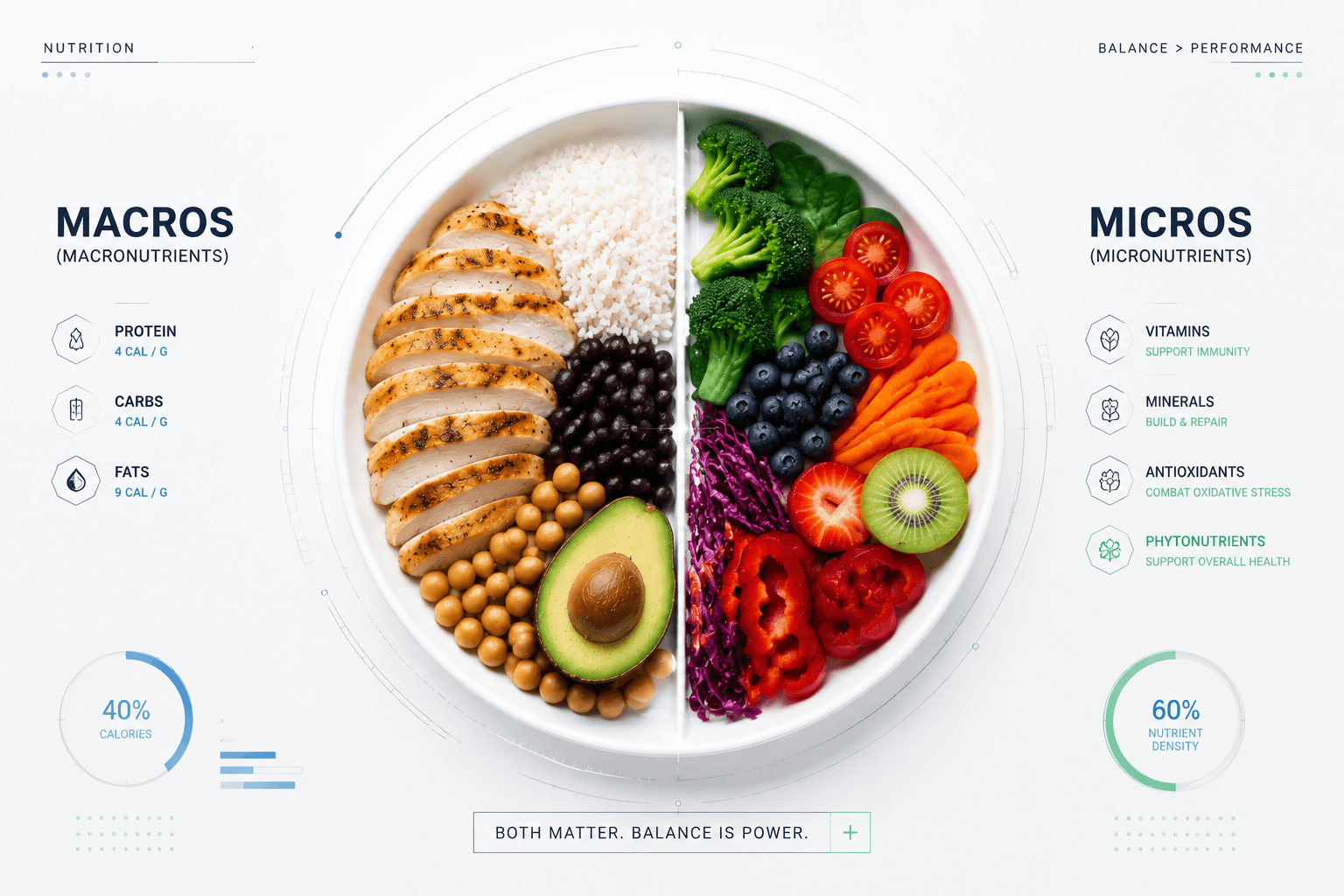
A diet that looks perfectly reasonable on paper, whole grains, lean protein, plenty of vegetables, can still be quietly light on one or two of these depending on which specific foods make up the rotation. Someone who eats mostly chicken and rice is covering protein and carbs well while still falling short on iron, calcium, and potassium most days. None of that shows up unless you're actually looking at the breakdown rather than the general shape of the diet.
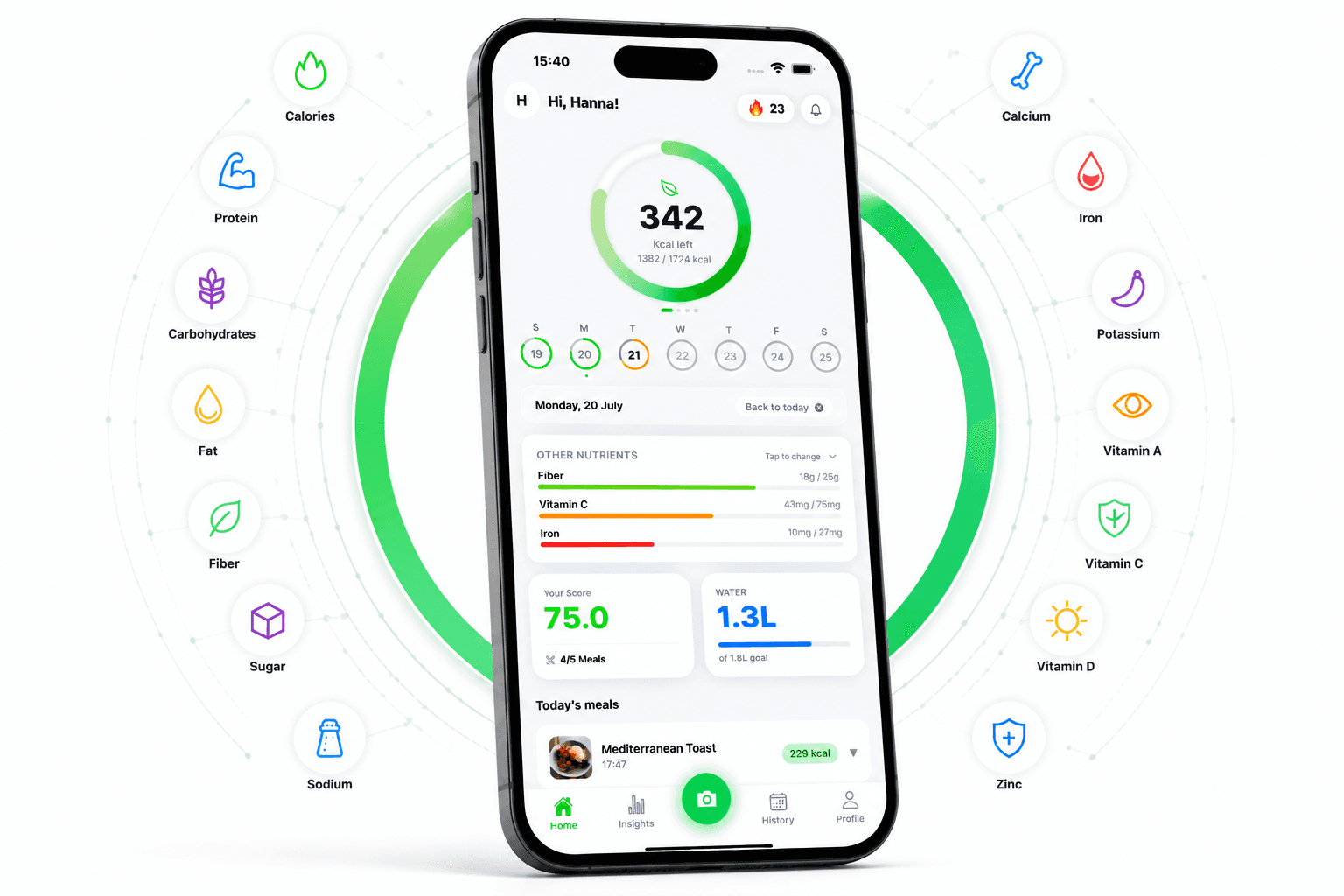
This is the same gap that shows up across the 14 nutrients that actually matter, and it's part of why tracking calories and macros alone, the approach in most nutrition apps, still leaves these five deficiencies invisible until they've already become a problem.
How to actually catch a gap before it becomes a problem
Ask for the right bloodwork. A standard checkup doesn't always include ferritin or zinc by default. If you suspect a specific gap based on symptoms, ask your doctor to test for it directly rather than assuming a routine panel already covers it.
Don't self-treat with supplements first. Several of these nutrients, iron and zinc especially, can cause real harm in excess or interfere with how your body absorbs other nutrients. Confirm before you supplement.
Actually see what you're eating, not just what you intend to eat. The gap between "I eat pretty healthy" and what's really on your plate day to day is usually where these deficiencies hide.
The bottom line
Iron, vitamin D, calcium, potassium, and zinc are five of the most common nutrient gaps out there, and every one of them can build for months without a clear signal. The symptoms overlap enough that guessing rarely works, which is exactly why seeing your actual intake, not just assuming your diet has it covered, is the more reliable path.
Try Fobalanz free and see whether any of these five gaps show up in your own numbers.
This article is general information, not medical advice. If you recognize several of these signs, talk to a healthcare professional and ask for the specific bloodwork that confirms or rules out a deficiency, rather than starting a supplement on your own.
Recommended intakes are based on NIH Office of Dietary Supplements fact sheets (Iron, Vitamin D, Calcium, Potassium, Zinc) and U.S. Dietary Guidelines for Americans.