The same nutrition advice doesn't hold up across an entire adult life. What your body needs at 25 is meaningfully different from what it needs while pregnant, while breastfeeding, or after 50, and general guidelines built around a broad adult population tend to blur those differences rather than address them directly. Each of these stages comes with a specific set of changes worth understanding on its own terms.
Pregnancy: Needs That Shift by Trimester
Pregnancy increases the need for several nutrients, but not all at once or at the same rate. Requirements shift as the pregnancy progresses.
Iron needs increase substantially, largely because blood volume expands significantly to support the growing baby. This is one of the most well documented nutrient increases in pregnancy, and iron deficiency during pregnancy is common enough that many prenatal care providers monitor it directly through bloodwork rather than assuming diet alone covers it.
Recommended daily iron intake, per U.S. NIH Dietary Reference Intakes. Individual needs vary, check with your doctor.
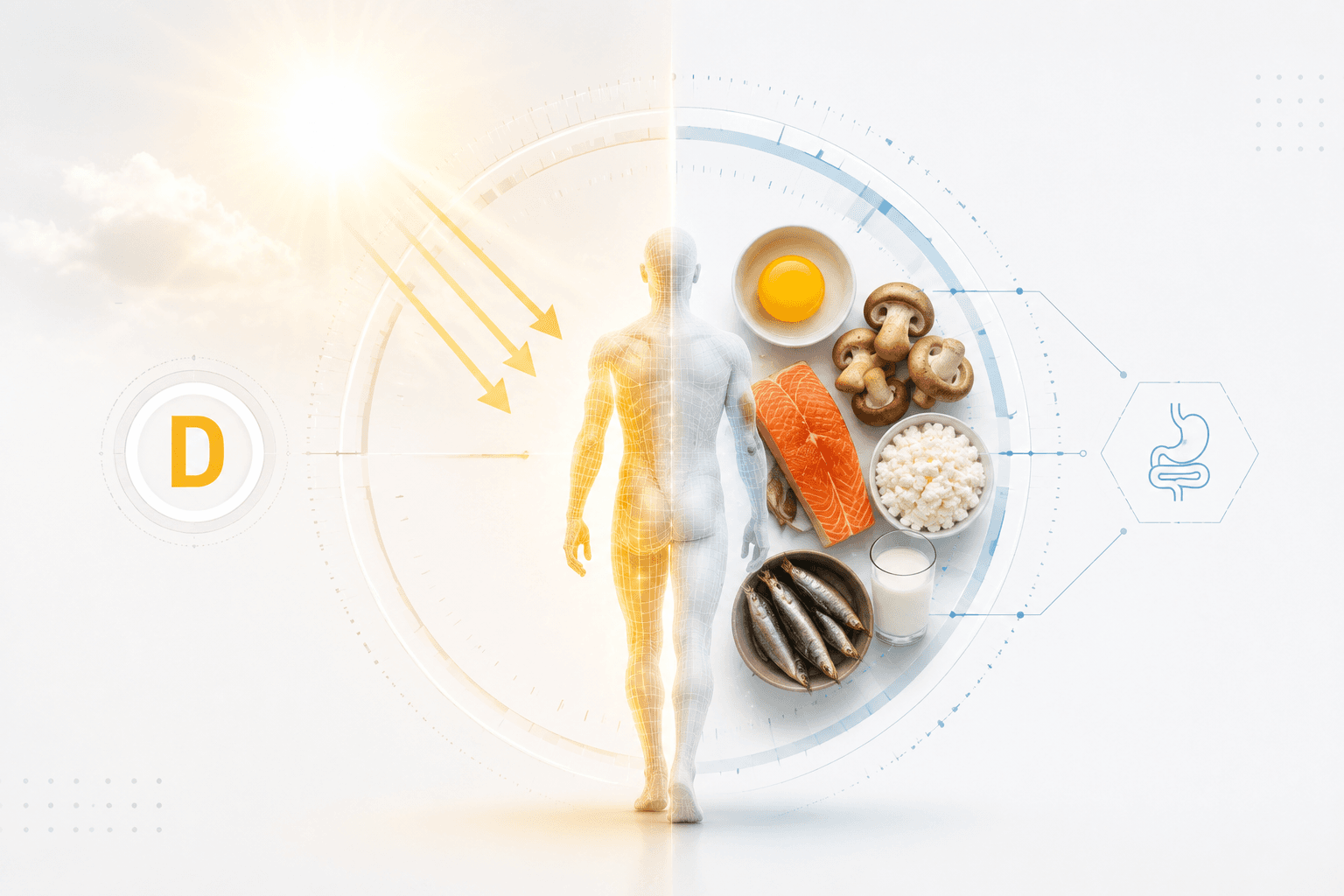
Calcium and vitamin D needs increase together, since the baby's skeletal development draws on the mother's calcium stores, and vitamin D is required for that calcium to be absorbed and used effectively.
Folate is the nutrient most associated with early pregnancy specifically, critical during the first weeks for neural tube development, often before many people know they're pregnant. This is why folate supplementation is typically recommended before conception for anyone planning a pregnancy, not just after a positive test. Diet alone is difficult to rely on for this window, which is part of why prenatal vitamins exist in the first place.
Every pregnancy is different, and nutrient needs can vary further based on individual health factors, so working directly with an OB or midwife on specific targets matters more here than in almost any other life stage covered in this article.
Breastfeeding: Needs That Continue, Sometimes Increase Further
Nutrient demands don't drop off after birth. Several needs remain elevated, and some increase further to support milk production.
Calcium demand stays high, since breast milk draws on the mother's calcium stores much like pregnancy did, and adequate intake helps protect bone density during this period.
Iron needs typically decrease somewhat compared to pregnancy, since the significant blood volume expansion is behind you, though replenishing stores depleted during pregnancy and delivery still matters.
Overall calorie and protein needs increase to support milk production, which is part of why breastfeeding isn't generally a time to be restricting food intake, even for those hoping to lose pregnancy weight.
After 50: A Different Set of Shifts
The nutritional priorities after 50 look different from earlier adulthood, driven by a combination of hormonal changes, slower metabolism, and reduced efficiency in absorbing certain nutrients.
Calcium and vitamin D become more critical for bone health, particularly for women navigating the hormonal changes of perimenopause and menopause, which accelerate bone density loss.
Vitamin B12 absorption often declines with age, since stomach acid production naturally decreases, reducing how efficiently B12 is absorbed from food regardless of intake. This is a case where diet alone doesn't fully solve the problem, and periodic blood testing is the more reliable way to monitor status.
Protein needs often increase relative to earlier adulthood, since the body becomes less efficient at using protein to maintain muscle mass, a process called anabolic resistance. Many researchers now recommend adults over 65 consume more protein than the standard RDA to help offset this.
The Common Thread Across These Stages
Each of these life stages involves your body prioritizing different functions, fetal development, milk production, or maintaining bone and muscle mass against a backdrop of natural decline, and nutrient needs shift accordingly. A single, static target for "adult nutrition" was never going to reflect any of these transitions accurately, which is exactly why generic recommendations feel disconnected from what people in these stages actually experience.
Making It Practical
Calcium, vitamin D, iron, and protein, the nutrients most consistently involved across pregnancy, breastfeeding, and life after 50, are all part of the 14 nutrients worth tracking beyond just calories. Fobalanz calculates personalized targets based on your profile and life stage, then tracks your intake against them as you log meals, which makes it easier to see whether your day to day eating is keeping pace with what your body actually needs right now, rather than relying on a number designed for the average adult.
This article is intended for general education and isn't a substitute for medical advice. Pregnancy and breastfeeding in particular involve individual factors that a general article can't account for, so working directly with your OB, midwife, or doctor on specific targets is the more reliable approach.