Hormonal shifts, whether from perimenopause, a condition like PCOS, or a thyroid issue, change what your body needs in ways that generic nutrition advice rarely addresses. Most articles on this topic either oversimplify into a list of "superfoods" or lean so heavily into supplement recommendations that the actual, well supported dietary factors get buried. This is an attempt to separate what has solid evidence behind it from what's mostly marketing, starting with the one area where diet has the clearest, most direct impact.
Perimenopause: Where Diet Makes the Clearest Difference
Perimenopause, the transitional years leading up to menopause, brings a decline in estrogen that directly affects two things diet has real influence over: bone density and cardiovascular health.
Calcium becomes more important, not less. Estrogen helps protect bone density, and as levels decline during perimenopause, the rate of bone loss accelerates. This makes adequate calcium intake more important during this stage than in earlier adulthood, not less, even though it's a nutrient people often stop thinking about once they're past their twenties.
Recommended daily calcium intake, per U.S. NIH Dietary Reference Intakes. Individual needs vary, check with your doctor.
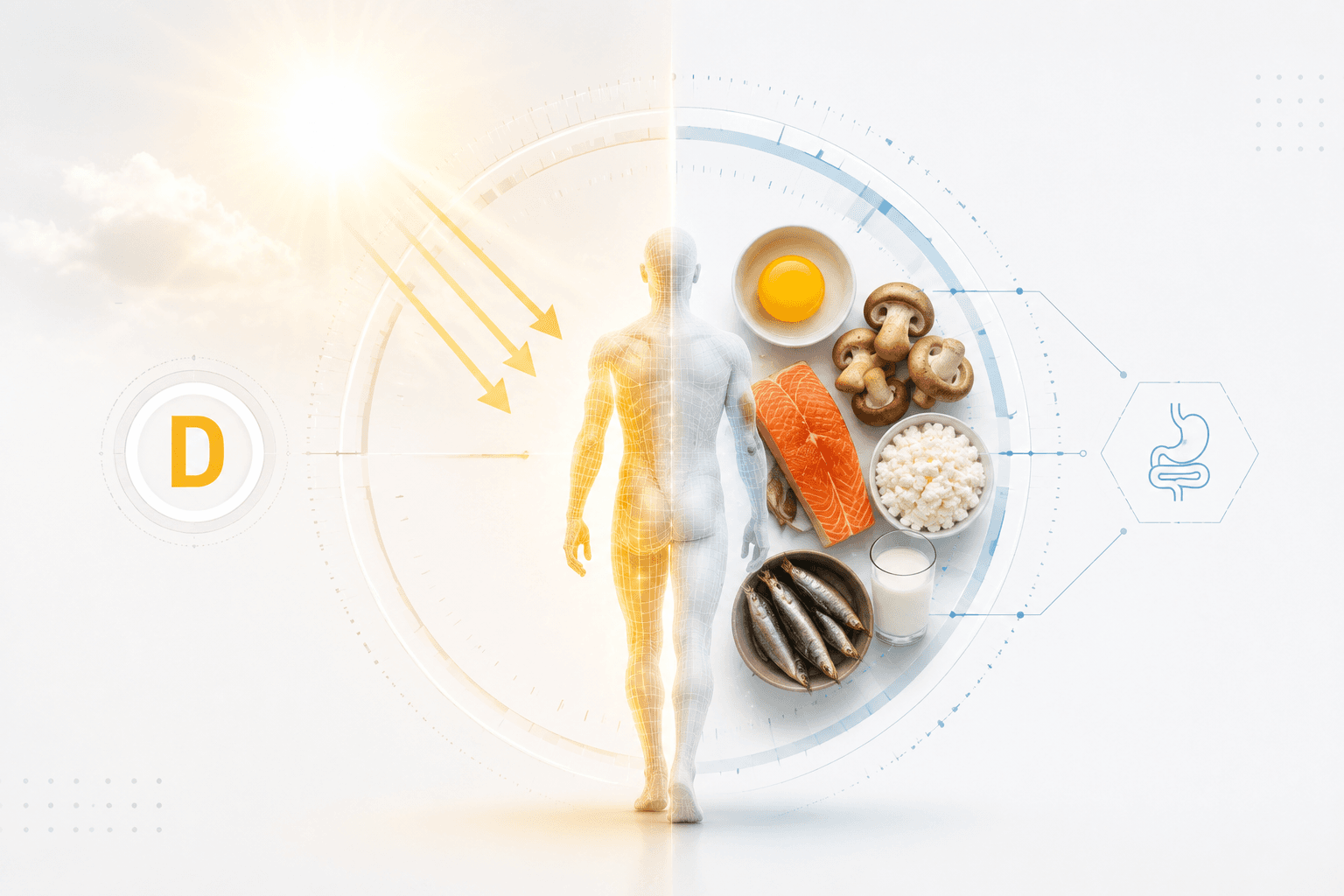
Vitamin D works alongside calcium, not separately. Calcium can't be absorbed effectively without adequate vitamin D, which makes the two nutrients a package deal rather than independent boxes to check. This pairing becomes especially relevant during perimenopause, when bone density protection matters most.
Symptoms like fatigue and low mood often overlap with nutrient gaps. Hormonal fluctuations during this stage can cause fatigue and mood changes on their own, but iron and vitamin D deficiencies produce nearly identical symptoms and are worth ruling out rather than assuming everything is hormonal.
The practical takeaway is that perimenopause is a stage where paying closer attention to calcium, vitamin D, and iron intake has genuine, well documented value, not just general "eat healthy" advice.
PCOS: Where Nutrition Plays a Supporting Role
Polycystic ovary syndrome affects insulin sensitivity for many people who have it, which is why nutrition conversations around PCOS often center on managing blood sugar responses through meal composition, like pairing carbohydrates with protein and fiber rather than eating them alone.
Beyond that general principle, PCOS nutrition research is still evolving, and a lot of what circulates online overstates the certainty of specific supplement recommendations. If you have PCOS, working with a doctor or dietitian familiar with your specific presentation is more useful than following generic online protocols, since the condition varies considerably from person to person.
Thyroid Health: Where Diet Has Real Limits
Thyroid conditions, whether an underactive or overactive thyroid, are primarily managed through medication once diagnosed, and diet plays a supporting role at most, not a replacement one. Iodine is the nutrient most closely tied to thyroid function, but this is genuinely a case where more isn't automatically better. Both too little and too much iodine can affect thyroid function, and for most people in countries with iodized salt, deficiency isn't the common concern it once was.
If you have a diagnosed thyroid condition, the most useful nutrition step is discussing it directly with your doctor rather than adjusting intake based on general articles, since the right approach depends heavily on which specific condition you have and how it's being treated.
Why We're Not Overselling This
It would be easy to stretch this into a longer list of nutrients tied to hormonal health, but a lot of what gets marketed around PCOS and thyroid nutrition specifically, things like inositol or iodine protocols, either has mixed evidence or requires medical supervision to use safely. The honest answer is that perimenopause is the area here with the clearest, most actionable dietary connection, while PCOS and thyroid health benefit far more from working directly with a doctor than from a checklist of foods to add.
Tracking What's Actually Actionable
If you're navigating perimenopause, calcium and vitamin D are the two nutrients with the clearest evidence and the most direct dietary lever, two of the 14 nutrients worth tracking beyond just calories. Fobalanz tracks both based on your meals, along with a personalized target that accounts for your profile, which gives you a practical way to see whether your day to day eating supports bone health during this stage, alongside whatever your doctor recommends for monitoring.
This article is intended for general education and isn't a substitute for medical advice. Hormonal conditions vary significantly from person to person, and a doctor or dietitian familiar with your specific situation is the best source for individualized guidance.