Three unrelated annoyances: a calf cramp that wakes you up at 2 AM, nails that chip and split no matter how much lotion you use, and legs that feel like they need to move right when you're trying to fall asleep. Most people treat each one as its own random inconvenience. But all three sit at the intersection of nutrition and the nervous or muscular system, and each one has a specific nutrient connection worth knowing, even if the connection isn't the one you'd guess first.
Muscle Cramps: Usually Not What You Think
The common assumption is dehydration, and while that plays a role, cramps are more directly tied to electrolyte balance than water intake alone. Potassium is the nutrient most consistently implicated. It's essential for muscle contraction and relaxation, and when levels run low, muscles become more prone to involuntary spasms, particularly at night when you're still and blood flow to the legs slows down.
Sodium and calcium are also involved in muscle contraction, and imbalances in either can contribute to cramping, though potassium tends to be the more common culprit in otherwise healthy adults. People on certain diuretics, endurance athletes who sweat heavily, and anyone eating a diet low in fruits and vegetables, the primary dietary source of potassium, face higher risk.
Good potassium sources include bananas, potatoes, beans, and leafy greens. If cramps are frequent and severe, especially if they involve muscles beyond the calves, it's worth mentioning to a doctor, since certain medications and underlying conditions can also be a factor.
Brittle Nails: More About Consistency Than a Single Vitamin
Nail health reflects what's been happening in your body over the past several months, since nails grow slowly and any disruption in nutrient supply shows up gradually rather than immediately. This is part of why brittle nails are frustrating to diagnose. By the time you notice the change, the cause may have already resolved.
Iron deficiency is one of the more well documented nutritional causes, sometimes producing a specific pattern called koilonychia, where nails become thin and slightly concave. Protein also matters here, since nails are made primarily of keratin, the same protein hair is built from, so chronically low protein intake can affect nail strength over time.
Biotin gets marketed heavily for nail health, similar to how it's marketed for hair, but actual biotin deficiency is uncommon in people eating a varied diet, and the evidence supporting supplementation in people without a diagnosed deficiency is limited. If brittle nails are a persistent issue, iron and protein intake are more evidence backed places to look first.
Restless Legs: The Strongest Single Connection Here
Of the three symptoms in this post, restless leg syndrome has the most direct and well established nutrient link. Multiple studies have connected low ferritin, the protein that reflects the body's stored iron, to restless leg symptoms, even in people whose iron levels don't meet the clinical threshold for anemia. Iron is involved in dopamine regulation in the brain, and dopamine pathways are directly implicated in restless leg syndrome, which is part of why the connection is stronger and more specific than with muscle cramps or nail health.
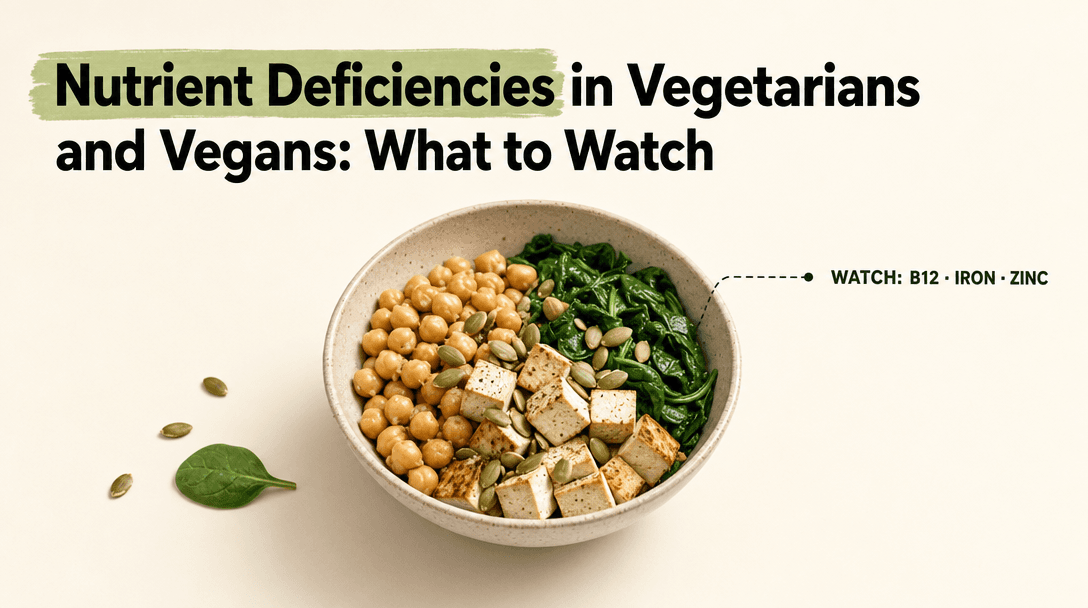
If you experience an uncomfortable, hard to describe urge to move your legs, particularly in the evening or when lying down, and you also fall into a higher risk group for low iron, such as being a woman with heavy periods or eating a primarily plant based diet, it's worth having ferritin checked specifically, not just standard iron levels, since ferritin can be low even when other iron markers look normal.
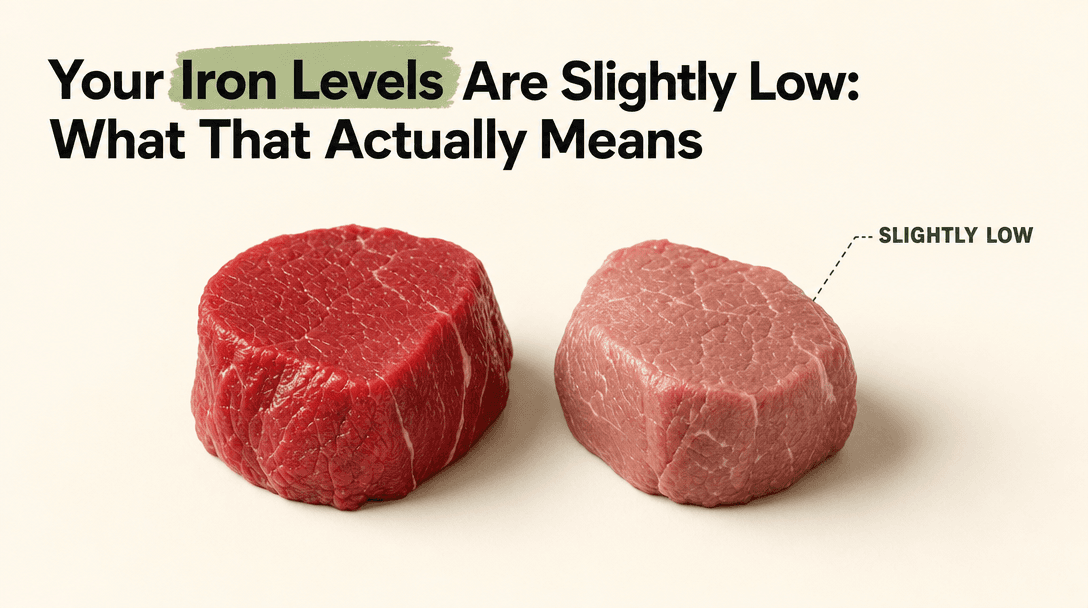
Illustrative example of a real, documented pattern: ferritin can sit near the bottom of its range while the rest of the iron panel still reads normal. Actual results vary, this is not a diagnostic tool.
Why These Three Symptoms Belong in the Same Conversation
Cramps, brittle nails, and restless legs rarely get discussed together because they don't share an obvious surface level connection. But underneath, they're all signals from tissue that's sensitive to nutrient availability, muscle, nail beds, and nerve function respectively, and all three point back to a small set of nutrients that are worth paying attention to together rather than chasing single symptom fixes in isolation.
Making It Practical
Potassium, calcium, and iron, the nutrients most consistently linked to these three symptoms, can all be reasonably estimated from what you eat, three of the 14 nutrients worth tracking beyond just calories. Fobalanz tracks all three as part of your daily intake, along with a personalized target, which makes it easier to spot patterns, like consistently low potassium on days you get frequent cramps, instead of treating each symptom as an isolated mystery.
This article is intended for general education and isn't a substitute for medical advice. If these symptoms are frequent, severe, or disrupting your sleep, it's worth bringing up with a doctor, since several other conditions can produce similar symptoms and deserve proper evaluation.