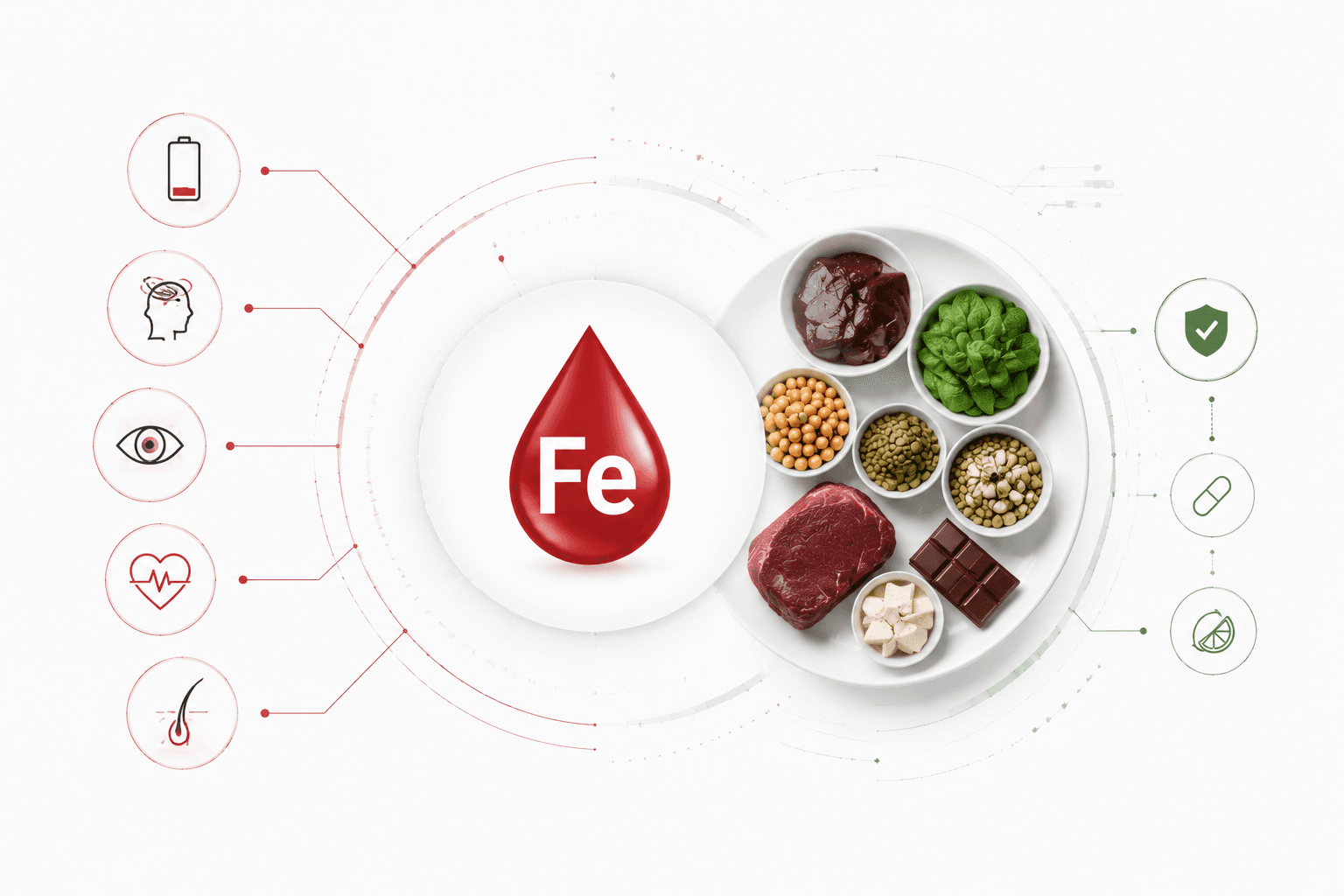
You got bloodwork done, and your doctor mentioned your iron is a little on the low side. Not low enough to diagnose anemia, not low enough for an immediate prescription, just slightly below where it should be. If that's the extent of what you were told, you're left in an odd spot: something is technically off, but nobody's treating it as a problem yet.
This gap between "normal" and "clinically low" is more common than it sounds, and it's worth understanding on its own terms instead of assuming it means nothing, especially if you've already read up on the more obvious signs of low iron.
Why "Slightly Low" Is Its Own Category
Iron status isn't a single number. Doctors typically look at a few different markers, and ferritin, which reflects your body's stored iron reserves, is often the one that shows a problem first. Ferritin can drop into the lower end of the reference range, or even slightly below it, well before hemoglobin drops low enough to meet the clinical definition of anemia.
This matters because anemia is essentially the later stage of iron depletion. Your body draws down stored iron first before red blood cell production is affected enough to show up as anemia on standard tests. A slightly low result often means you've caught the process early, before it's progressed to something your doctor would treat immediately.
Illustrative representation of the ferritin reference range. Exact cutoffs vary by lab and by sex, so use this as a mental model, not a diagnostic chart.
Symptoms Can Show Up Before the Numbers Look Severe
Research has found that people with low ferritin but normal hemoglobin can still experience real symptoms, including fatigue, difficulty concentrating, and reduced exercise tolerance. This is part of why some people feel distinctly better after their iron improves, even though their original bloodwork never crossed into anemia territory. The lab reference range for "normal" is fairly wide, and where you personally feel best within that range can differ from the bare minimum cutoff.
Common Reasons Iron Ends Up on the Lower End
Diet. Iron from plant sources is absorbed less efficiently than iron from meat, which is why vegetarians and vegans are more likely to land in this borderline zone, even with a reasonably balanced diet.
Menstruation. Regular blood loss through periods is one of the most common reasons women's iron trends lower than men's on average, and heavier cycles increase the effect further.
Endurance exercise. Regular intense exercise, particularly running, is associated with somewhat lower iron levels, thought to be related to increased iron loss through sweat and minor gastrointestinal blood loss during training.
Frequent blood donation. Each donation temporarily reduces iron stores, and donating more often than your body can replenish through diet can gradually push ferritin toward the lower end.
Recent pregnancy. Iron stores are commonly depleted during pregnancy and take time to rebuild afterward.
What to Actually Do About It
A slightly low result generally doesn't call for the same response as a diagnosed deficiency. It's usually a signal to pay closer attention to iron intake through diet before things progress further, rather than an immediate need for high dose supplementation, which can cause digestive side effects and isn't necessary for everyone in this range.
Practical steps that make a real difference include pairing iron rich foods with a source of vitamin C, which improves absorption, and being mindful that coffee and tea consumed close to meals can reduce how much iron your body absorbs from that meal. If you're in this borderline range, your doctor may also recommend rechecking your levels in a few months rather than starting treatment immediately, simply to see which direction the trend is heading.
Why Tracking Matters More at This Stage Than After a Diagnosis
Once iron deficiency becomes clinical, treatment is usually straightforward and doctor directed. The borderline stage is actually where day to day awareness makes the most difference, since the goal is preventing further decline through diet rather than correcting an established deficiency.
This is where Fobalanz is genuinely useful. It tracks your iron intake from meals against a personalized target, one of the 14 nutrients worth tracking beyond just calories, so if you know you're in this lower range, you can see whether your day to day eating is trending toward supporting your levels or working against them, well before your next bloodwork appointment.
This article is intended for general education and isn't a substitute for medical advice. If you've been told your iron is on the low side, ask your doctor whether a recheck is recommended and over what timeframe.